

TREND RESEARCH From published sources / US · UK · Canada · Australia
RESEARCH TERRITORY / CODE + ADOPTION
Stars point to curiosity. Production use needs a different map.
Developer excitement is easy to see in open repositories. Teams adopt infrastructure tools only when installation, maintenance and compatibility are consistently better than alternatives.
See the original sources No made-up rankings

THE RESEARCH LENSFrom install to productionDevTools / FIELD NOTES
WHAT MATTERS
Questions that matter in this market.
Use these as a research framework, not a claim that a measured trend proves demand.
What breaks when a dependency updates?
Who will support the tool in production?
A PRACTICAL FIELD PLAN
Turn uncertainty into a small, useful experiment.
Reproduce the main workflow in a small project and measure time to first useful result. Ask what prevents production adoption.
Interpretation limit. A popular repository can still have poor support, retention or commercial prospects.
Reproduce the quick start
Measure time to first successful result in a clean environment.
Test integration burden
Try the tool with existing systems, versions and permissions.
Follow retention signals
Investigate issue resolution, maintainers and sustained usage instead of only star counts.
SOURCE STRATEGY
GitHub measures developer activity, not contracts, active seats or annual revenue.
Read source definitionsTHE RESEARCH ANGLE
Look past stars to developer workflow.
Repository stars indicate developer attention, not active usage or revenue. Evaluate installation friction, compatibility and the practical task a tool replaces. Developers may try a project because it is novel; teams adopt it when it solves a repeated problem and can be maintained.
A practical first experiment
Reproduce the main workflow in a small project and measure time to first useful result. Ask what prevents production adoption.
- What happens when the tool fails?
- Who maintains compatibility with the stack?

DevTools trends
Measured momentum. Useful context. A place to start.

DevToolsRegular Growth
GitHub repository activity: explore dated activity for Visual Studio Code. Useful for asking better questions, not predicting sales.
+176%growth · available history
6M downwardChange within this source (0–100)24/100
Useful forDevelopersRead the research

DevToolsRegular Growth
GitHub repository activity: explore dated activity for Next.js. Useful for asking better questions, not predicting sales.
+161%growth · available history
6M downwardChange within this source (0–100)13/100
Useful forDevelopersRead the research

DevToolsRegular Growth
GitHub repository activity: explore dated activity for Vue.js. Useful for asking better questions, not predicting sales.
+331%growth · available history
6M upwardChange within this source (0–100)11/100
Useful forDevelopersRead the research

DevToolsRegular Growth
GitHub repository activity: explore dated activity for Kubernetes. Useful for asking better questions, not predicting sales.
+351%growth · available history
6M downwardChange within this source (0–100)9/100
Useful forDevelopersRead the research

DevToolsStable
GitHub repository activity: explore dated activity for React (software). Useful for asking better questions, not predicting sales.
-43%growth · available history
6M upwardChange within this source (0–100)4/100
Useful forDevelopersRead the research

DevToolsRegular Growth
GitHub repository activity: explore dated activity for PostgreSQL. Useful for asking better questions, not predicting sales.
+16%growth · available history
6M downwardChange within this source (0–100)2/100
Useful forDevelopersRead the research

DevToolsRegular Growth
GitHub repository activity: explore dated activity for Node.js. Useful for asking better questions, not predicting sales.
+68%growth · available history
6M upwardChange within this source (0–100)2/100
Useful forDevelopersRead the research
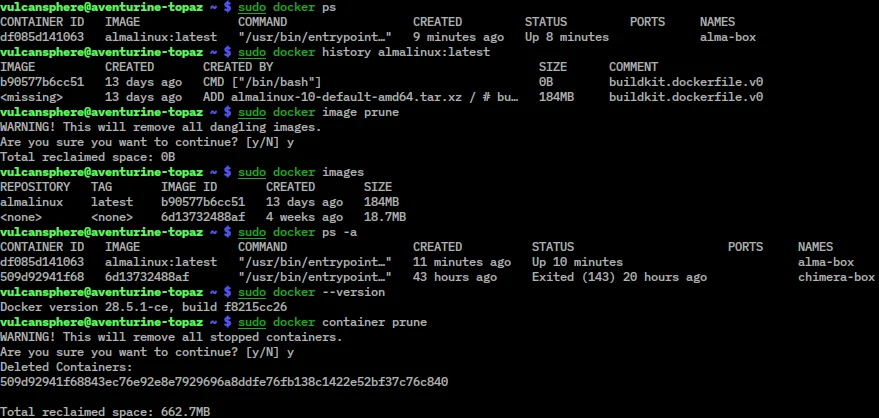
DevToolsStable
GitHub repository activity: explore dated activity for Docker (software). Useful for asking better questions, not predicting sales.
-12%growth · available history
6M downwardChange within this source (0–100)1/100
Useful forDevelopersRead the research
DevToolsRegular Growth
GitHub repository activity: explore dated activity for Rust (programming language). Useful for asking better questions, not predicting sales.
+28%growth · available history
6M upwardChange within this source (0–100)1/100
Useful forDevelopersRead the research

DevToolsStable
Wikipedia article views: explore dated activity for Python (programming language). Useful for asking better questions, not predicting sales.
-11%growth · available history
6M downwardChange within this source (0–100)0/100
Useful forDevelopersRead the research

DevToolsPeaked
GitHub repository activity: explore dated activity for Django. Useful for asking better questions, not predicting sales.
-50%growth · available history
6M upwardChange within this source (0–100)0/100
Useful forDevelopersRead the research

DevToolsPeaked
GitHub repository activity: explore dated activity for Svelte. Useful for asking better questions, not predicting sales.
-67%growth · available history
6M downwardChange within this source (0–100)0/100
Useful forDevelopersRead the research

DevToolsRegular Growth
GitHub repository activity: explore dated activity for Terraform (software). Useful for asking better questions, not predicting sales.
+82%growth · available history
6M upwardChange within this source (0–100)0/100
Useful forDevelopersRead the research

DevToolsPeaked
GitHub repository activity: explore dated activity for TypeScript. Useful for asking better questions, not predicting sales.
+59%growth · available history
6M downwardChange within this source (0–100)0/100
Useful forDevelopersRead the research
| # | Trend / category | Sources | Momentum | Growth | 6M outlook | History | Compare |
|---|---|---|---|---|---|---|---|
| 1 | Visual Studio CodeDevTools · Global | Regular Growth | +176% | Downward | |||
| 2 | Next.jsDevTools · Global | Regular Growth | +161% | Downward | |||
| 3 | Vue.jsDevTools · Global | Regular Growth | +331% | Upward | |||
| 4 | KubernetesDevTools · Global | Regular Growth | +351% | Downward | |||
| 5 | React (software)DevTools · Global | Stable | -43% | Upward | |||
| 6 | PostgreSQLDevTools · Global | Regular Growth | +16% | Downward | |||
| 7 | Node.jsDevTools · Global | Regular Growth | +68% | Upward | |||
| 8 | Docker (software)DevTools · Global | Stable | -12% | Downward | |||
| 9 | Rust (programming language)DevTools · Global | Regular Growth | +28% | Upward | |||
| 10 | Python (programming language)DevTools · Global | Stable | -11% | Downward | |||
| 11 | DjangoDevTools · Global | Peaked | -50% | Upward | |||
| 12 | SvelteDevTools · Global | Peaked | -67% | Downward | |||
| 13 | Terraform (software)DevTools · Global | Regular Growth | +82% | Upward | |||
| 14 | TypeScriptDevTools · Global | Peaked | +59% | Downward |
LOOK BEYOND THE GROWTH BADGEA signal is the beginning.
A signal is the beginning.
Context makes it useful.
Search interest, pageviews and community activity measure different things. We keep the sources separate, show the available history, and distinguish projections from observations.
Read our methodologyFIELD NOTE / DEVTOOLS
What the index cannot establish.
Repository stars indicate developer attention, not active usage or revenue. Evaluate installation friction, compatibility and the practical task a tool replaces. Developers may try a project because it is novel; teams adopt it when it solves a repeated problem and can be maintained.
Questions to take into a real interview
- What happens when the tool fails?
- Who maintains compatibility with the stack?
GET SMARTER WITH EVERY STEP
All research guidesField notes for curious minds.
Practical guides to help turn what you observe into a decision.
 RESEARCH PLAYBOOK
How to read a trend chart without mistaking attention for demand
Check source, baseline, scope and persistence before acting on a rising topic.
Read this guide RESEARCH PLAYBOOK
Validate a niche before you build the product
Turn a trend into a specific buyer, a repeated problem and an inexpensive experiment.
Read this guide- RESEARCH PLAYBOOK
Compare search, Wikipedia, GitHub and Reddit fairly
Understand normalization and independent corroboration before combining evidence.
Read this guide - RESEARCH PLAYBOOK
Find a buyer with a problem that cannot wait
Interview for concrete urgency: a recent incident, a costly workaround and a person who can approve change.
Read this guide - RESEARCH PLAYBOOK
Audit a source before trusting its latest chart
Find delayed observations, changing source definitions and misleading comparisons before acting on a trend.
Read this guide - RESEARCH PLAYBOOK
Design the smallest credible market experiment
A practical framework for a bounded test with an observable result, realistic costs and a stop rule.
Read this guide